

Origins & Identity
Although Chinese Mauritians make up around 2% to 3% of the island's total population, over 80% trace their ancestry to Hakka immigrants originating from the Meixian (Moiyan) district in Guangdong province.
The word Hakka (客家) translates to "guest families," reflecting a history of migration across southern China before expanding overseas. In Mauritius, Hakka settlers built tightly knit community networks, preserving their dialect, culinary traditions, and ancestral spirituality while integrating seamlessly into the nation's multicultural fabric.
Key Facts
- Primary Origin: Meixian, Guangdong
- First Arrivals: Late 18th & 19th Century
- Cultural Hub: Chinatown, Port Louis
- Languages: Hakka, Mauritian Creole, French, English
Key Historical Waves
The First Pioneers
Early Chinese migrants arrived during the French colonial era as free artisans, carpenters, and sailors. Many settled in Port Louis near the harbor.
The Hakka Boom
Encouraged by early settlers via chain migration, large numbers of Hakka families fled instability in southern China. They established dry-goods stores across every village on the island.
Modern Legacy
From retail trade, Hakka descendants branched out into law, medicine, manufacturing (textiles), finance, and civil service, shaping modern Mauritian economic development.
Chinatown & Sacred Landmarks
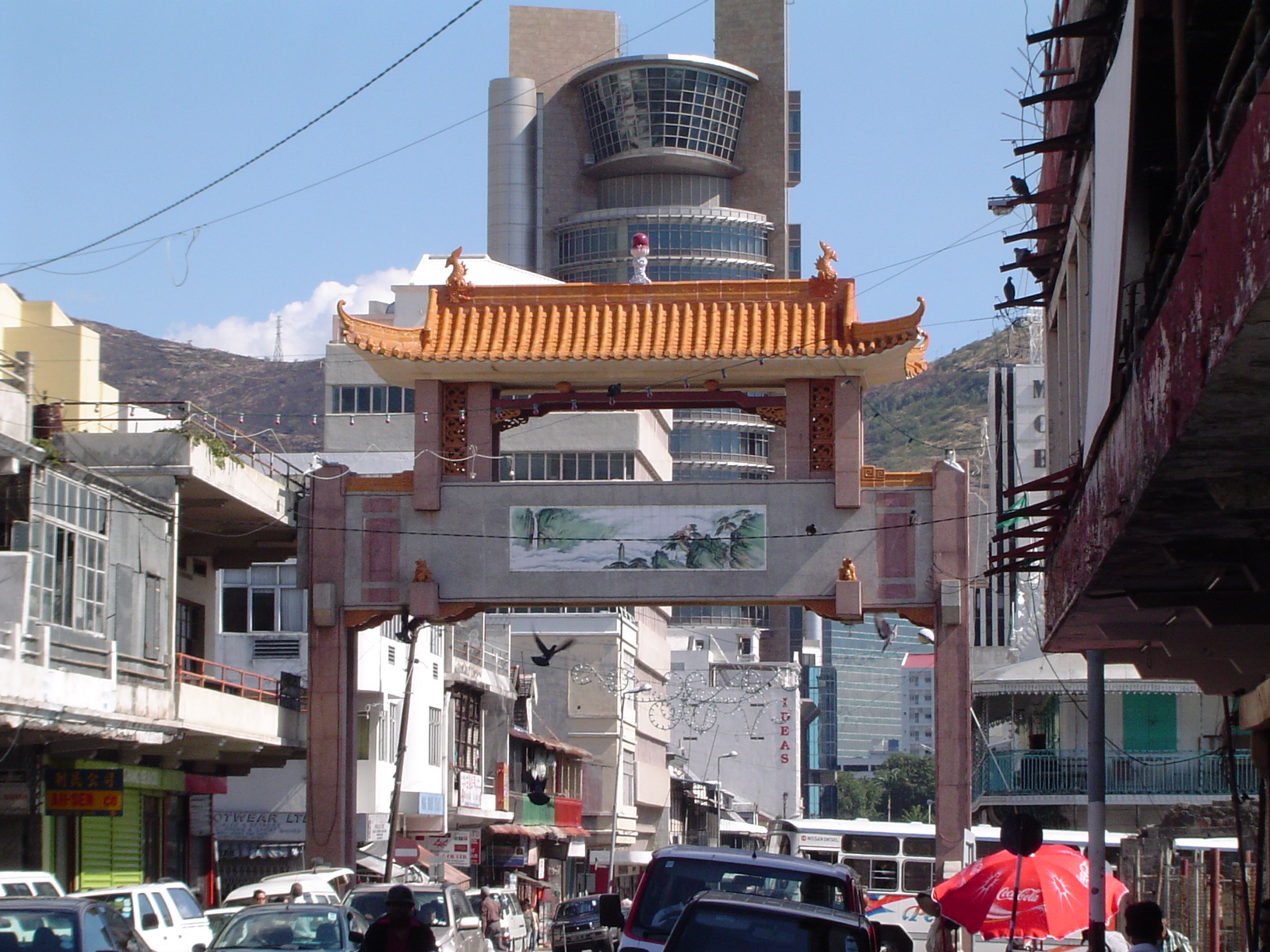
Established in the early 19th century along Royal Street in Port Louis, Chinatown serves as the cultural, commercial, and spiritual heart of the Sino-Mauritian community.
Marked by decorative red archways (Pailou), Chinatown features traditional herbalists, wholesale merchants, Hakka restaurants, and ancestral clan houses. Annual initiatives like the Chinatown Food & Cultural Festival draw tens of thousands of visitors to celebrate street performances, dragon dances, and authentic culinary heritage.
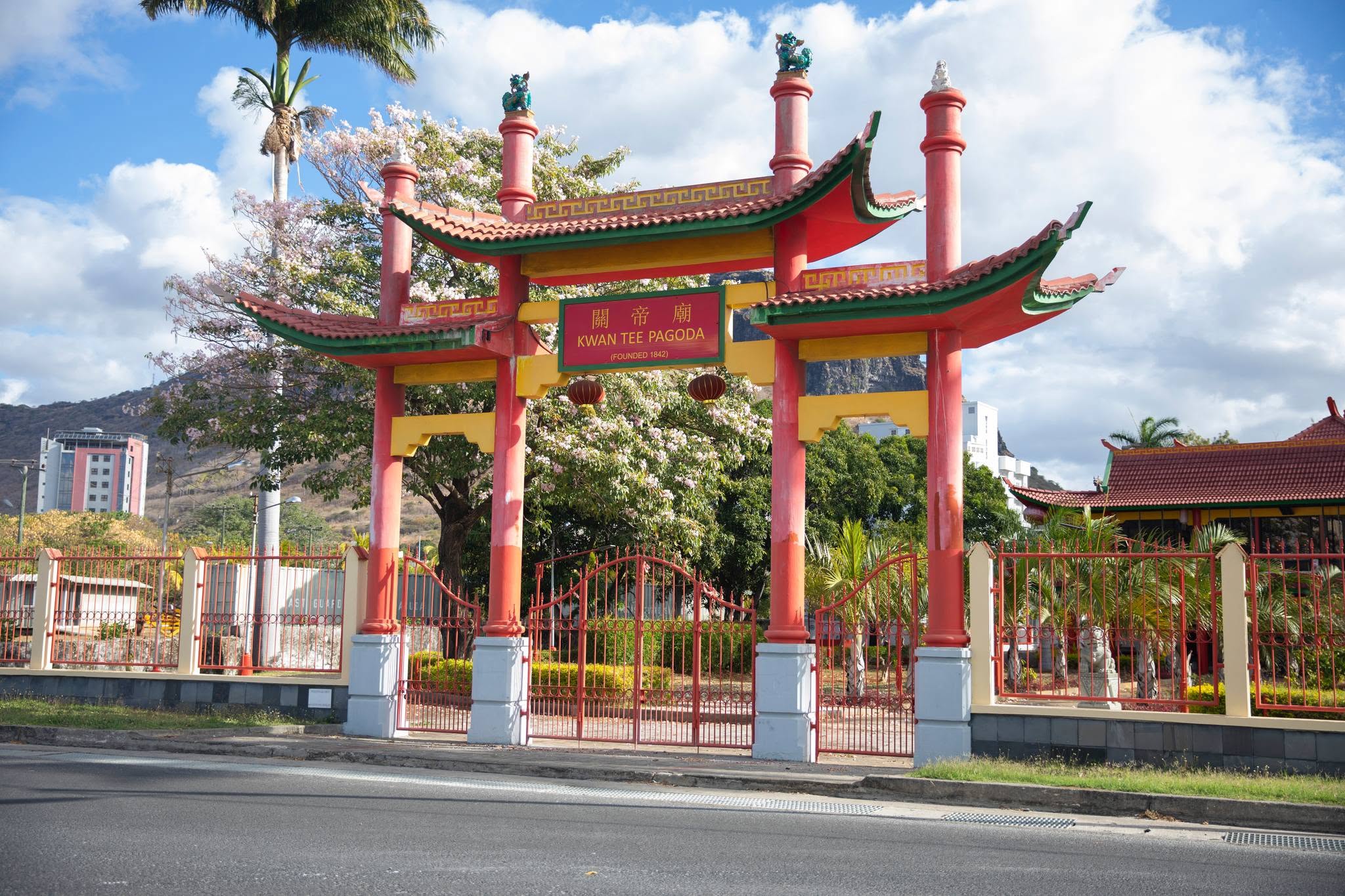
Kwan Tee Pagoda (Les Salines)
Built in 1842 at Les Salines, Port Louis, the Kwan Tee Pagoda (Guan Di Temple) is the oldest surviving Chinese temple in the southern hemisphere.
Dedicated to Guan Yu—the warrior deity representing loyalty, righteousness, and integrity—it served as a sanctuary where early Hakka immigrants gathered for social cohesion, dispute resolution, and spiritual solace.
Traditional Chinese Festivals in Mauritius
Spring Festival (Chinese New Year)
A national public holiday in Mauritius. Celebrated with red lanterns, family reunions, firecrackers to ward off evil spirits, and vibrant Lion Dances performing in towns and homes.
Kwan Tee Festival
Observed mid-year on the 24th day of the 6th lunar month. Devotees gather at pagodas to offer red candles, incense, roasted pork, and prayers for prosperity and justice.
Mid-Autumn Festival (Moon Festival)
Celebrated during the full moon of the 8th lunar month. Families share traditional mooncakes (Lopia) stuffed with sweet bean paste or lotus seeds while admiring the full moon.
The "La Boutik Sinwa" Icon
The Chinese general store (La Boutik Sinwa) was an essential social institution in Mauritian villages. Run by Hakka families, these shops supplied essential goods on credit using a famous small ledger book (carnet).
This mutual trust system provided a social safety net for working-class families across sugarcane estates, cementing deep bonds between the Hakka community and other ethnic groups.
Sino-Mauritian Culinary Fusion
Hakka culinary traditions blended with local spices to create iconic staples of everyday Mauritian food:
- Boulettes: Steamed dumplings (Niuk Yen / beef meatballs, chayote/chouchou dumplings, fishballs) served in hot broth.
- Mine Frire: Wok-fried egg noodles with soy sauce, garlic, and greens.
- Gâteaux Gingli: Sesame seed rice balls served during festive events.
Authentic Sino-Mauritian Recipes
Bring the famous flavors of Hakka Mauritian street food into your kitchen.
1. Boulettes Chouchou (Niuk Yen)
Chayote Dumplings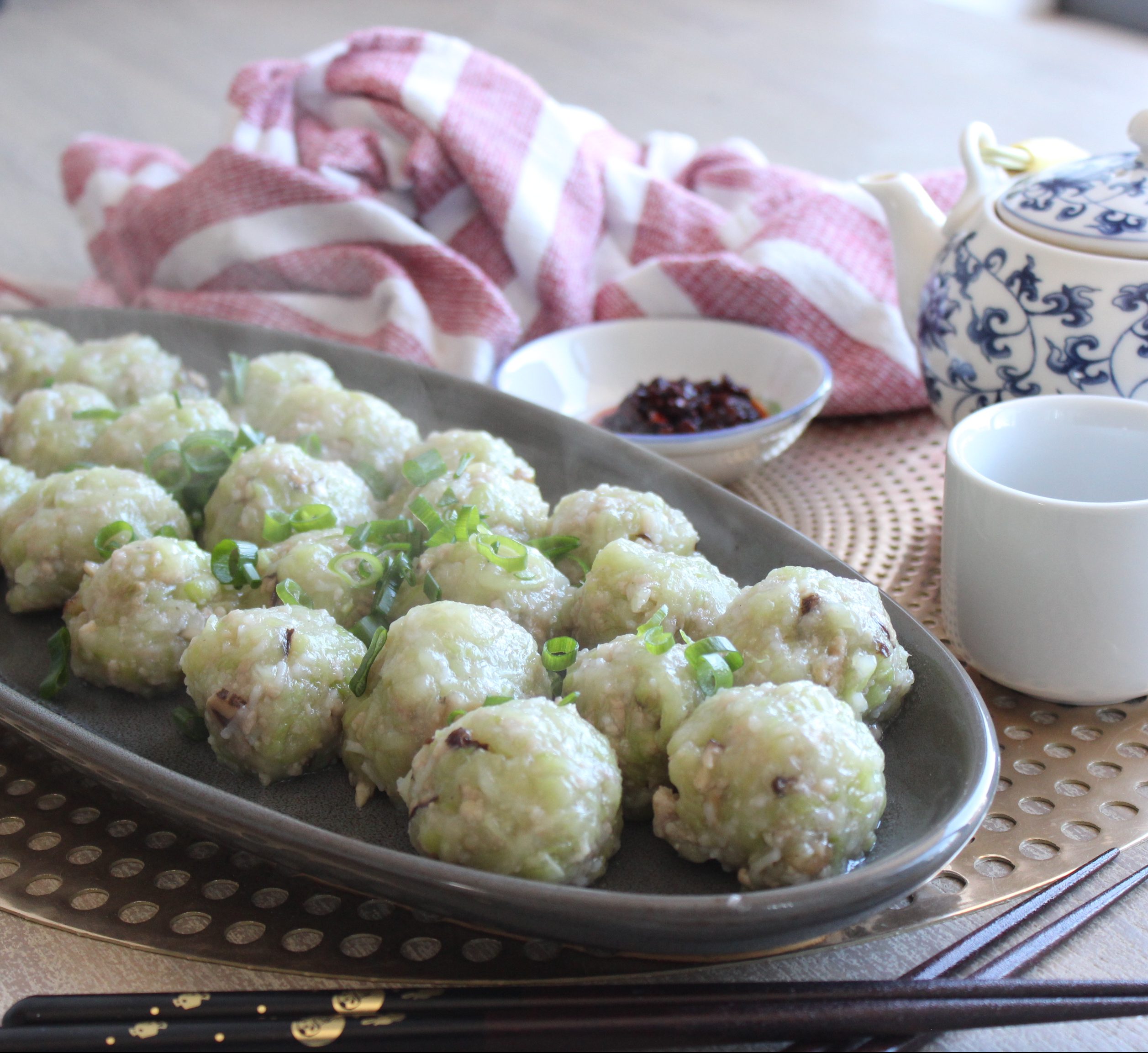
A staple street food created by grating local chayote squash (chouchou) and binding it with tapioca starch and seasoned minced meat or shrimp.
Ingredients:
- 2 medium Chouchou (Chayote squash), peeled & finely grated
- 200g Minced beef, pork, or shrimp
- 1 cup Tapioca starch (manioc starch)
- 1 tbsp Light soy sauce & 1 tsp Sesame oil
- 1 tsp Grated ginger, salt, and white pepper
- Chopped spring onions & garlic chili sauce for serving
Preparation:
- Grate the chouchou finely and squeeze out as much excess liquid as possible using a clean cloth.
- In a mixing bowl, combine grated chouchou, minced meat, soy sauce, sesame oil, ginger, salt, and pepper.
- Gradually fold in the tapioca starch until the mixture becomes sticky enough to shape into small balls.
- Roll into bite-sized balls and arrange on a lightly greased steamer tray.
- Steam on high heat for 15 to 20 minutes until translucent and firm. Serve piping hot with broth or chili paste.
2. Classic Mauritian Mine Frire
Fried Noodle Stir-Fry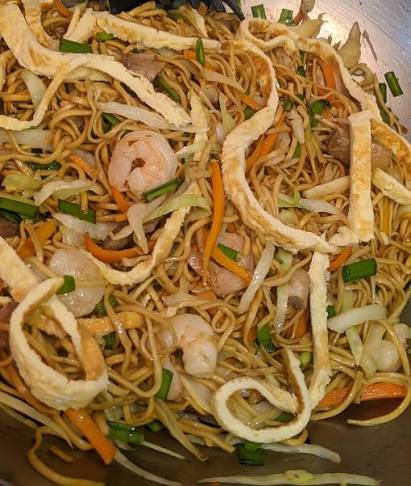
Wok-fried egg noodles tossed with dark soy sauce, tender chicken or beef, egg strips, and crisp bok choy, topped with fresh scallions and garlic water.
Ingredients:
- 400g Fresh Mauritian egg noodles (or fresh ramen noodles)
- 200g Chicken breast or beef, sliced thinly
- 2 eggs, beaten (cooked into a thin omelet & sliced into strips)
- 1 cup Chinese cabbage (Bok Choy / Bredes), chopped
- 2 tbsp Dark soy sauce & 1 tbsp Light soy sauce
- 2 cloves Garlic, minced & 1 tbsp Vegetable oil
- Fresh spring onions for garnish
Preparation:
- Loosen the fresh egg noodles in boiling water for 1 minute, drain, and coat with a drop of oil.
- Heat oil in a wok over high heat. Fry garlic and marinated meat until golden and cooked through.
- Add chopped bok choy and toss quickly for 30 seconds.
- Add the noodles, dark soy sauce, and light soy sauce. Stir-fry rapidly on high heat for 2–3 minutes so noodles absorb the dark color and wok aroma.
- Garnish with shredded omelet strips, chopped spring onions, and serve with traditional Mauritian garlic sauce or chili paste.