
Republic of Mauritius
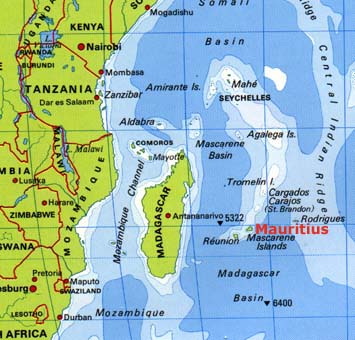
Mauritius, officially the Republic of Mauritius, is an island nation in the Indian Ocean about 2,000 kilometres (1,200 mi) off the south-east coast of the African continent.
An island of volcanic origin with an area of 1,864 km², it is almost entirely surrounded by coral reefs. The land rises from coastal plains to a central plateau where it reaches a height of 670 meters. The plateau is bordered by three mountain ranges, with the highest peak, Piton de la Petite Rivière Noire, rising to 828 m.
It includes the eponymous main island of Mauritius and Rodrigues, Agaléga, and St. Brandon. The islands of Mauritius and Rodrigues form part of the Mascarene Islands, along with nearby Réunion, a French overseas department.
The capital and largest city, Port Louis, is located on Mauritius, where most of the population is concentrated. The country spans 2,040 square kilometres (790 sq mi) and has an Exclusive Economic Zone covering 2.3 million square kilometres. It enjoys a maritime sub-tropical climate with temperatures averaging 22°C on the central plateau.
History & Settlement
Mauritius was known to early Arab traders as marked on their ancient maps, but the first European visitors were the Portuguese, who landed in 1510. They used the island as a victualling stop on the way to Goa and Malacca but did not establish a permanent settlement.
The first attempt at colonisation was made by the Dutch, who arrived in 1598 and named the island Mauritius after Prince Maurice of Nassau. They introduced sugar cane, Malagasy labor, and Javanese deer. However, they abandoned their settlements in 1710.
The French occupied the island from 1715 to 1810, renaming it Isle de France. Many place names across the island today remain lasting reminders of this era.
In 1810, British forces captured the island, reverting its name to Mauritius. Following the abolition of slavery, indentured workers arrived from India and China, creating a rich multicultural society.
Mauritius gained independence on March 12, 1968, and officially became a Republic on March 12, 1992.
Chronology of Key Events
A historical timeline of Mauritius from early maritime discovery to the modern Republic.
Early Maritime Discovery
- 10th Century: Phoenicians, Malays, Swahili, and Arab seamen visit the island without settling. Named Dina Robin by Arab mariners.
- 1498: Portuguese explorers discover Mauritius following Vasco da Gama's voyage around the Cape of Good Hope.
- 1510: Portuguese navigator Pedro Mascarenhas visits and names it Cirné. Used strictly as a victualling port of call.
Dutch Settlement & Colonial Era
- 1598: Dutch claim the uninhabited island and rename it Mauritius after Maurice, Prince of Orange.
- 1638–1658: First Dutch settlement attempt begins but eventually fails.
- 1664–1710: Second Dutch settlement attempt fails. The Dutch withdraw permanently in 1710. By this time, the Dodo becomes extinct and pirates temporarily inhabit the island.
French Rule (Isle de France)
- 1715: French East India Company claims Mauritius for France, renaming it Isle de France.
- 1721–1767: Port Louis is founded as a naval base for attacking British interests in India.
- 1767: Control transfers directly to the French government.
- 1796: Local settlers resist French control when Paris attempts to abolish slavery.
- 1810: British forces land and capture the island after defeating the French at the Battle of Cap Malheureux.
British Colonial Period & Indentured Labor
- 1812: Colonel Draper founds the Mauritius Turf Club (Champ de Mars), the oldest racecourse in the southern hemisphere.
- 1814: Mauritius, Seychelles, and Rodrigues officially ceded to Britain under the Treaty of Paris. Name reverts to Mauritius.
- 1834–1835: Slavery abolished. Indentured labor system introduced, leading to hundreds of thousands of workers arriving from India.
- 1847: Issuance of the famous "Post Office" / "Penny Black" postage stamps.
- 1876: Indian Rupee becomes official currency.
- 1910: Indentured labor system abolished. Between 1834–1910, 451,776 Indian workers arrived to work on sugar estates.
Path to Governance & Independence
- 1926: First Indo-Mauritians elected to government council.
- 1948–1958: New constitutions extend voting rights to all adults over 21.
- 1959: First general election under universal adult suffrage won by the Mauritian Labour Party (MLP), led by Sir Seewoosagur Ramgoolam.
- 1960: Cyclone Carol devastates the island, prompting major housing reforms.
- March 12, 1968: Mauritius officially achieves Independence.
Modern Era & Republic Status
- 1971: First Export Processing Zone created, driving rapid industrial and economic development.
- 1985: Sir Seewoosagur Ramgoolam, Father of the Nation, passes away.
- March 12, 1992: Mauritius officially becomes a Republic within the Commonwealth.
- March 12, 2018: Celebration of the 50th Anniversary of Independence.
The Legendary Dodo
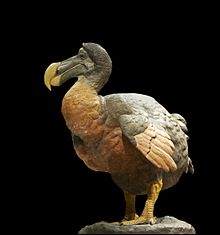
Dodos were descendants of a species of pigeon that settled in Mauritius over 4 million years ago. With no natural predators on the island, they gradually lost the ability to fly and nested safely on the ground.
Following human arrival and the introduction of non-native species like pigs, monkeys, and rats, ground nests were disrupted. Within a century of human settlement, the population rapidly declined. The last recorded dodo was killed in 1681.
Languages & Linguistic Heritage
The official administrative language is English, while French and Mauritian Creole (Morisyen) are widely spoken across daily life and press.
Reflecting the nation's diverse heritage, many Mauritians also speak ancestral languages such as Hindi, Bhojpuri, Hakka Chinese, Tamil, Telugu, and Urdu.
Cultural Heritage: Sega & Seggae
The traditional folkloric dance of Mauritius is the Sega. Originating among African descendants, it is driven by the rhythmic beats of the Ravanne (goat-skin circular drum), Maravanne (rattle box), and Triangle. Adopted across all communities, Sega is celebrated nationwide on all occasions.
In the late 1980s, a unique musical fusion of Sega and Reggae emerged known as Seggae. Pioneers popularized this vibrant rhythm, making it an integral part of modern Mauritian music culture.

National Symbols of Mauritius
The National Flag ("Les Quatre Bandes")
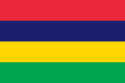
RED: Represents the struggle for freedom and independence.
BLUE: Represents the Indian Ocean surrounding the island.
YELLOW: Represents the new light of independence shining over Mauritius.
GREEN: Represents the rich agricultural landscape throughout the year.
National Anthem: "Motherland"
Lyrics by Jean Georges Prosper, MBE (1968)
O motherland of mine.
Sweet is thy beauty,
Sweet is thy fragrance,
Around thee we gather
As one people, As one nation,
For peace, justice and liberty.
Beloved country, may God bless thee.
🎧 Listen to the National Anthem:
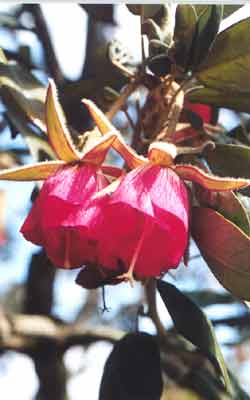
National Flower: Trochetia Boutoniana
Trochetia boutoniana (commonly known as 'Boucle d'Oreille') was declared the National Flower of Mauritius on March 12, 1992.
Named after botanist Louis Bouton, this reddish-orange bell-shaped flower originally bloomed on the slopes of Le Morne Brabant mountain from June to October.
Coat of Arms
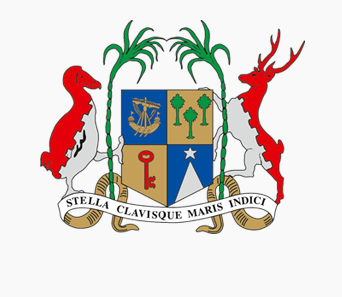
Motto: "Stella Clavisque Maris Indici"
(Star and Key of the Indian Ocean)
Supporters: A Dodo and a Sambur Deer, each supporting a sugar cane erect.
Reference: Government of Republic of Mauritius Website
Experience Mauritian Community in Toronto
Club M brings together the Mauritian diaspora in the Greater Toronto Area through sports, cultural gatherings, and community events.